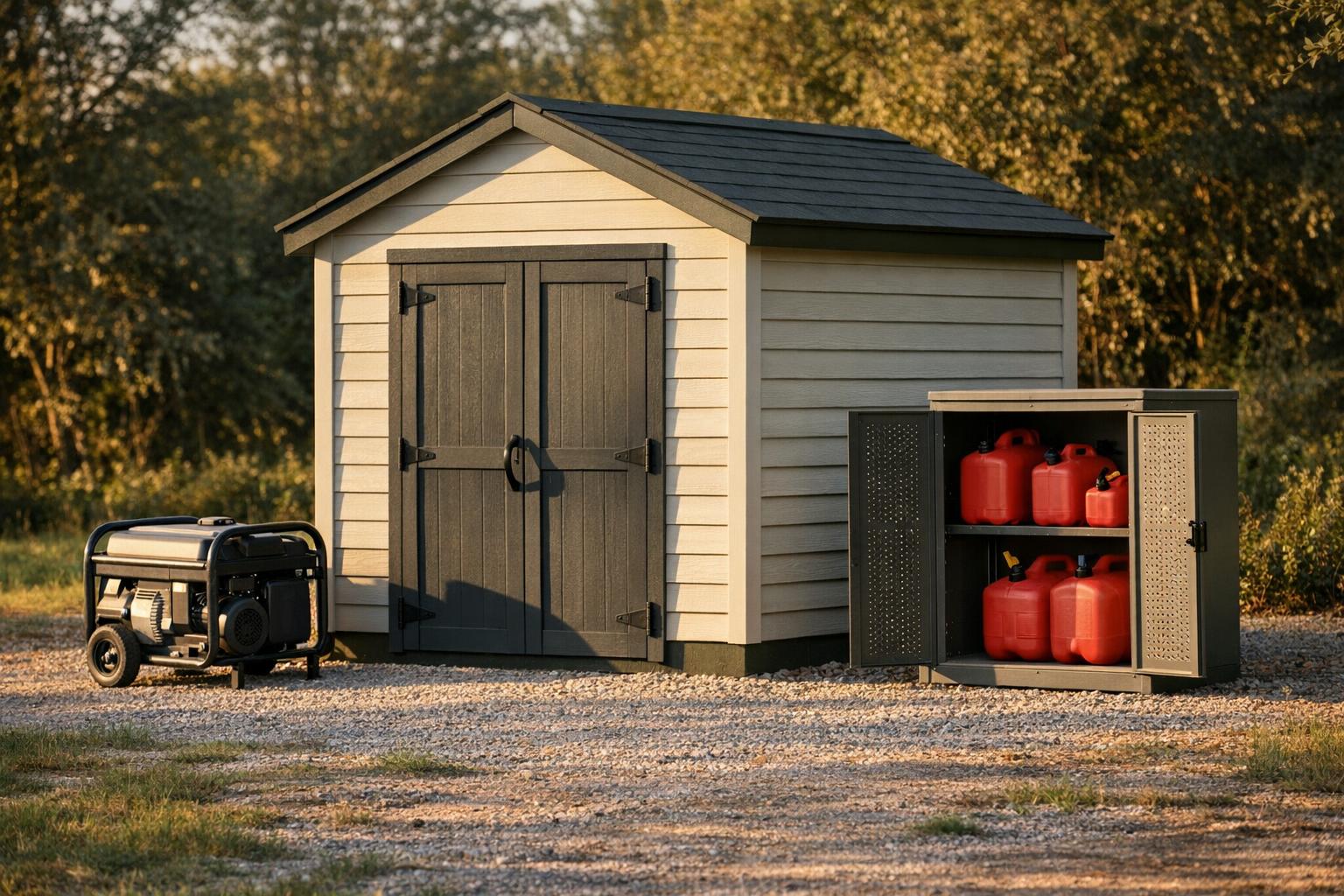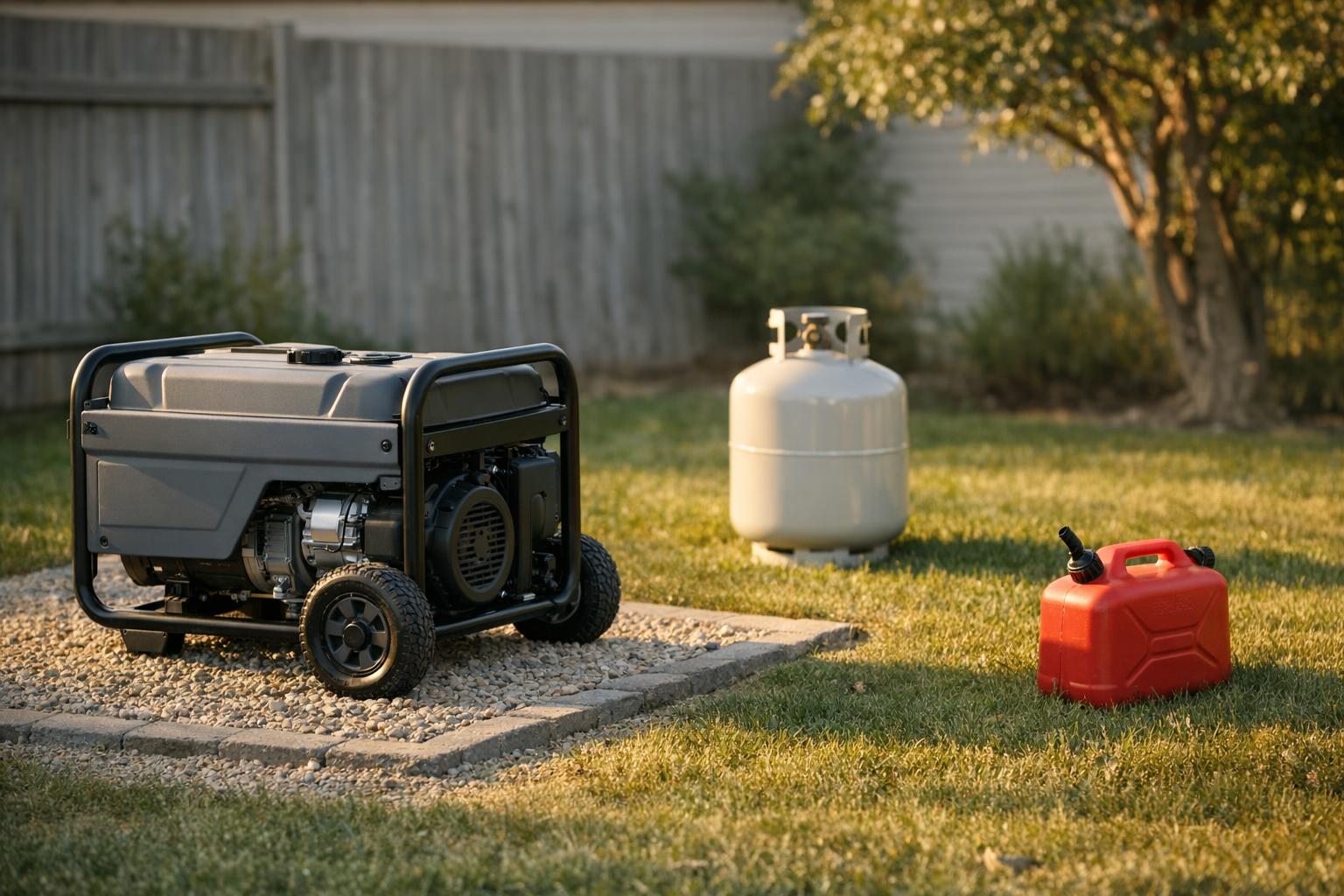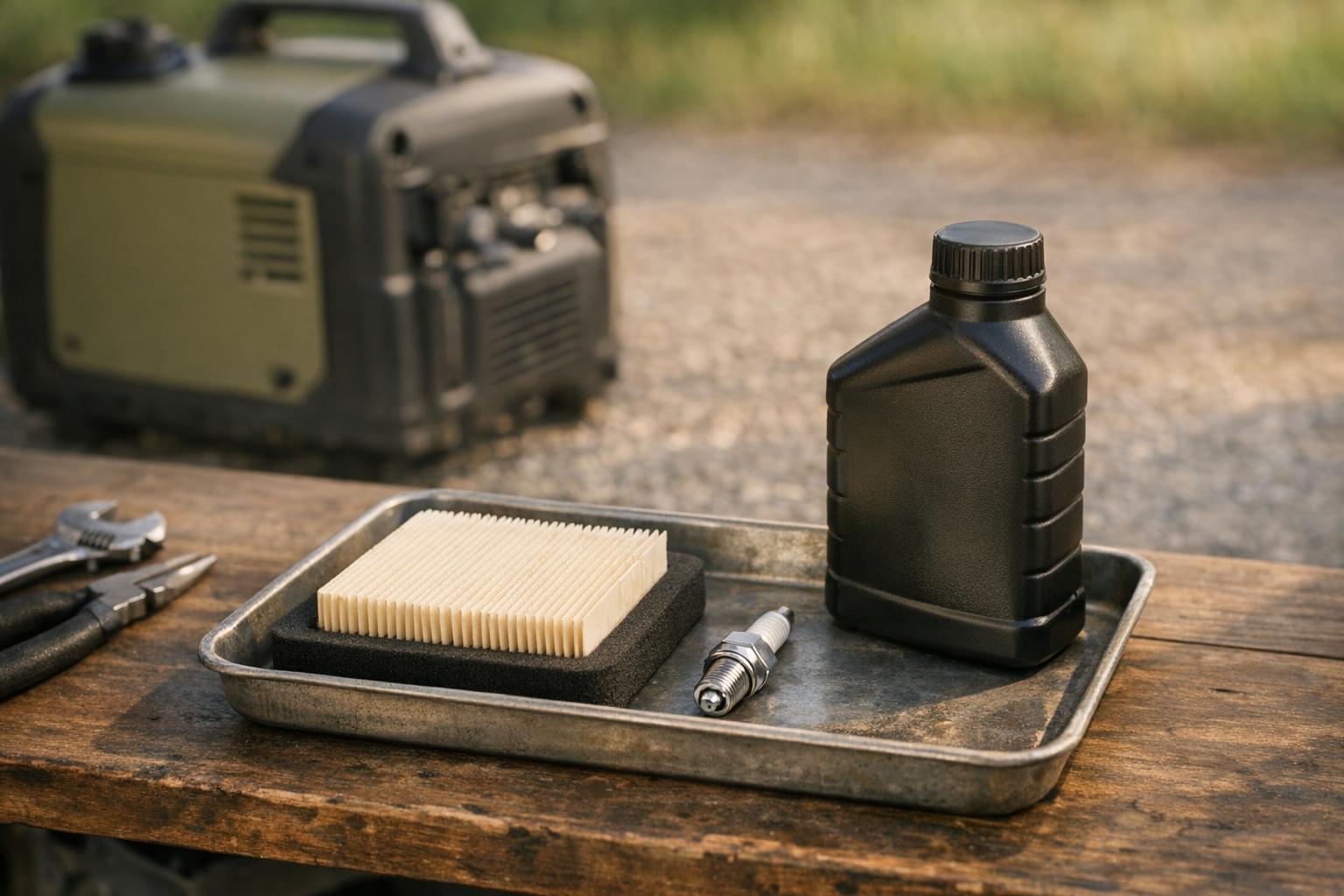
Generators fail at the moment of need for boring reasons: stale fuel, neglected oil, a battery left to drain. The fix is not mechanical talent — it is a calendar. Your model’s manual is the authority for intervals and procedures; this article gives you the rhythm to hang it on.
The manual sets the intervals — your calendar enforces them
Every engine manufacturer publishes break-in and service intervals: typically a first oil change after the initial hours of use, then oil at regular hour-or-season intervals, air filter checks, spark plug inspection, and valve clearance service at longer horizons. The specific numbers belong to your engine’s manual, not to a generic article. What owners actually lack is enforcement — put the intervals in the same calendar that reminds you of everything else in your life.
Oil: the five-minute habit that saves the engine
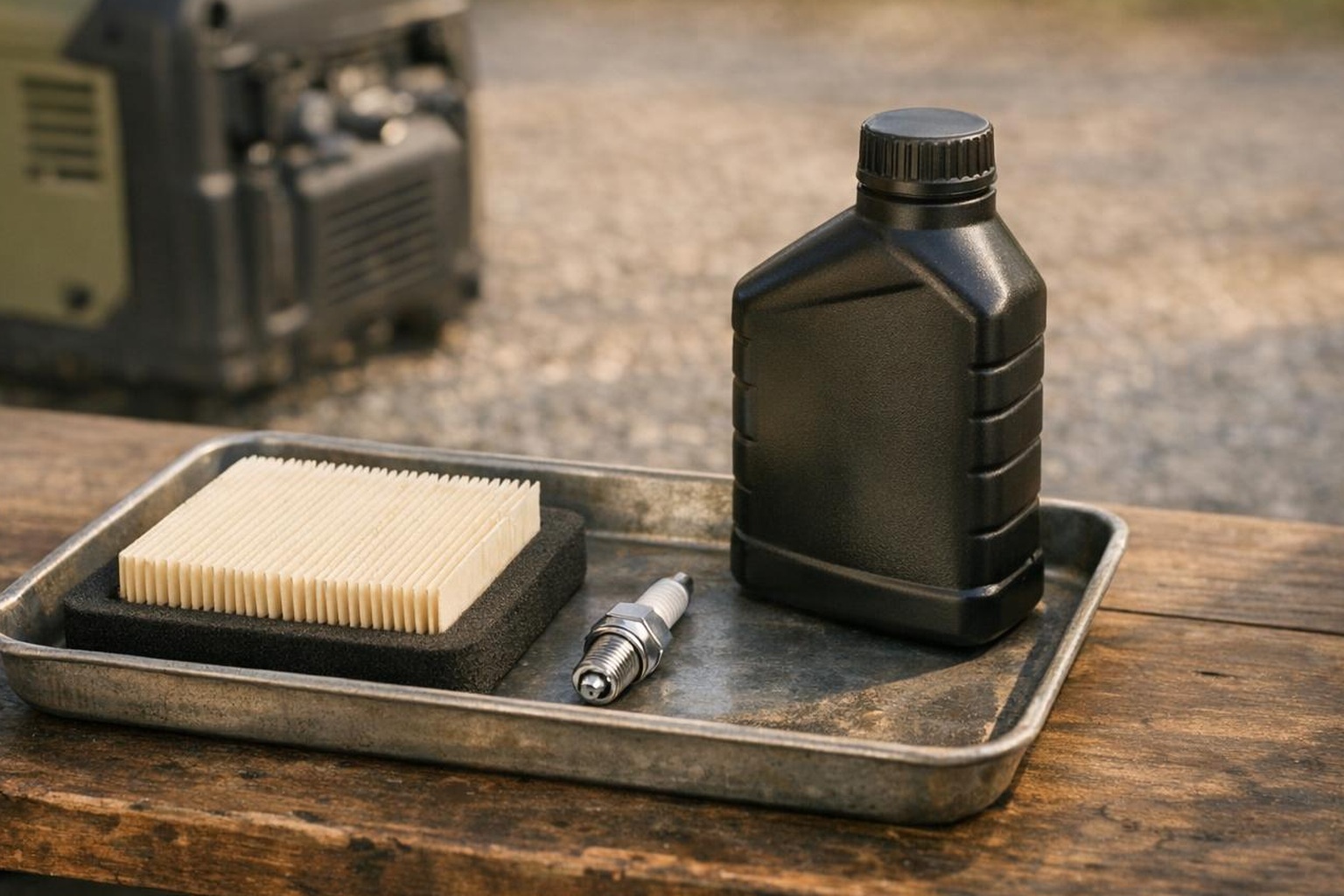
Check oil before every use — many modern units include low-oil shutoff, but the shutoff protects the engine by leaving you in the dark. Change oil at the manual’s interval, more often under heavy load or dusty conditions, and keep at least one spare fill of the specified grade with the generator. After a multi-day outage of sustained running, assume an oil change is due regardless of the calendar.
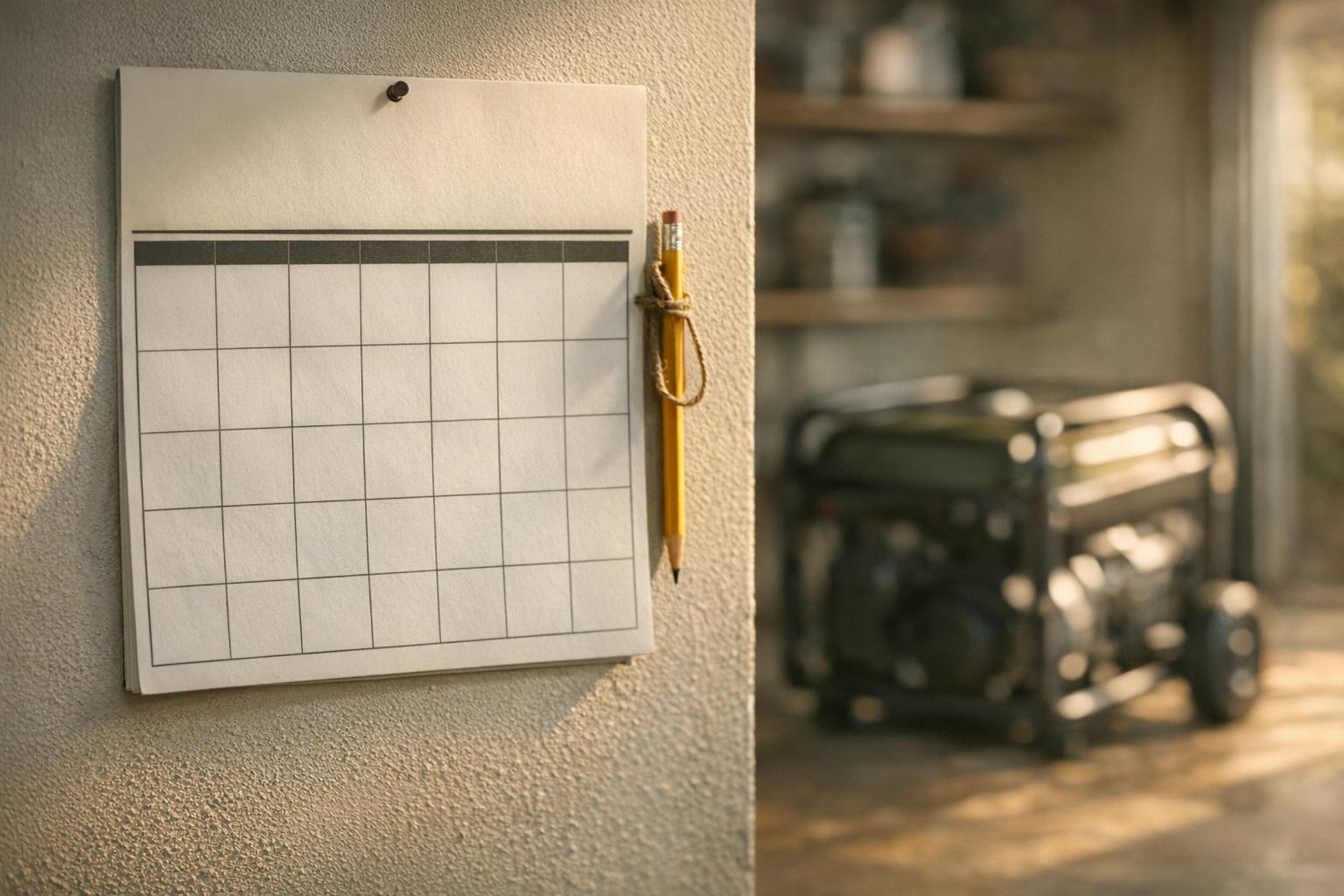
Monthly exercise and battery care
Start the generator briefly on a regular rhythm — monthly is a common manual recommendation — and let it run under a modest load outdoors, in the position and clearances described in our CO placement guide. Exercise circulates oil, keeps carburetor passages wet, and surfaces problems on a calm Saturday instead of a storm night. Electric-start models have a starting battery that discharges over months: keep it on the maintenance schedule (and know the recoil backup procedure).
Fuel system care differs by fuel
Gasoline is the maintenance burden: stale fuel is the most common no-start cause. Run the carburetor dry or treat and rotate fuel per the manual before storage, and see our fuel storage guide for the storage side. Propane operation on dual fuel units largely sidesteps fuel aging — one of the quiet ownership arguments in our dual fuel comparison — but hoses, regulators and cylinder valves still get a visual inspection for damage and leaks per the manual’s procedure.
Filters, plugs and the parts box
Air filters clog fast in dusty yards; a suffocating filter costs power and wastes fuel. Spark plugs are inspected on interval and replaced cheaply. Keep a small parts box with the generator: specified oil, a spare air filter and plug, the plug wrench, fresh stabilizer, and a printed copy of the quick-start steps — outage night is a bad time to search for a 10 mm socket by flashlight.
The pre-season readiness check
Before your region’s outage season — hurricane, ice storm or fire-weather — run a full rehearsal: fresh oil confirmed, exercise run under load, cords and inlet connections inspected, fuel stock rotated and counted against the runtime math in our sizing guide. Twenty minutes of rehearsal converts the generator from stored object to working plan.
Keeping maintenance records that pay off later
A simple log — date, hours run if your model tracks them, oil changed, filter checked, fuel rotated — turns maintenance from a vague sense of \"I probably did that\" into a record you can actually trust during an outage. It also pays off at resale: a documented maintenance history is one of the few ways a private buyer can distinguish a well-kept generator from one that was neglected and merely looks clean. Keep the log with the generator's manual, not in a phone note you might not have during an outage.
Seasonal transitions are natural checkpoints to update the log. Before the season your region is most exposed to outages — hurricane season, winter storm season, wildfire-driven public safety shutoffs — pair the log review with the pre-season readiness check described above. If the log shows an overdue oil change or a fuel rotation past its planned date, treat that as a blocking issue to resolve before the season starts, not a task to fold into the next available weekend. Generators are forgiving of a great many things; they are not forgiving of being asked to start reliably after months of undocumented neglect.
Finally, do not neglect the generator's physical housing and wheels. Corroded battery terminals, seized wheel bearings, and a frame left sitting in standing water all quietly undermine reliability even when the engine itself is well maintained. A five-minute visual walk-around at each maintenance interval — checking for corrosion, cracked fuel lines and loose hardware — catches problems long before they become the reason a generator will not start when it matters most.