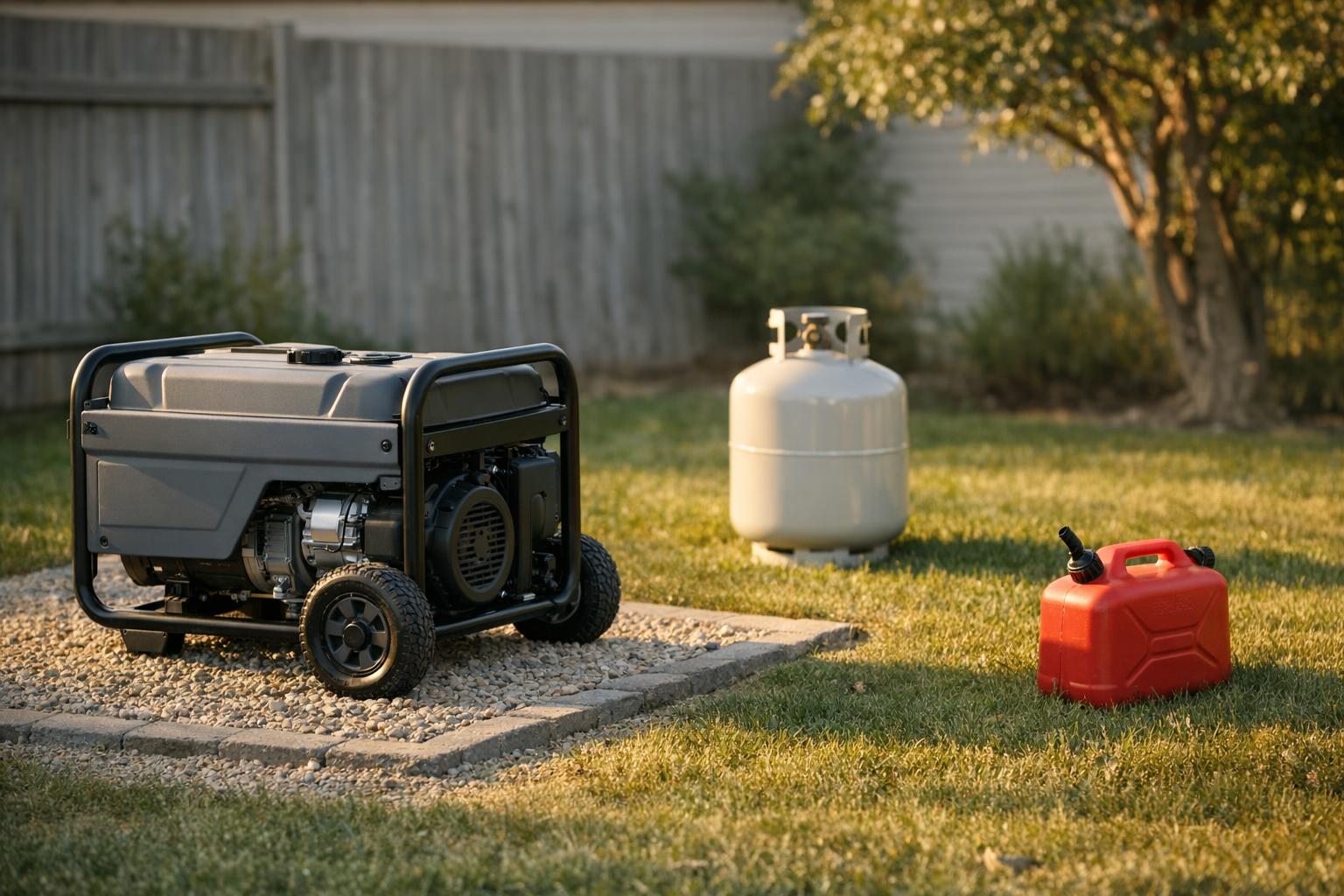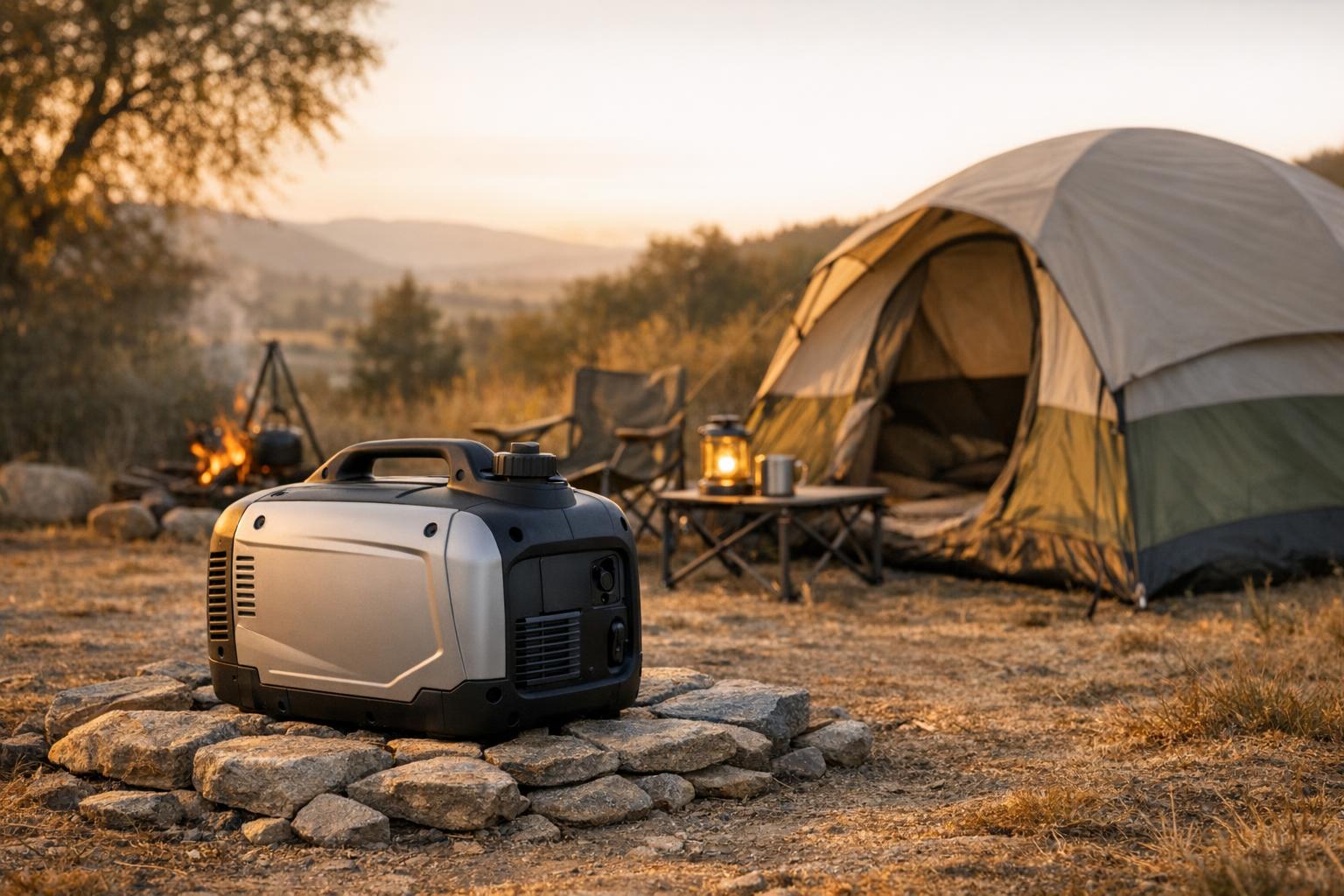
The inverter premium buys three things: cleaner power for sensitive electronics, engines that throttle down to match the load, and enclosures engineered for quiet. For neighborhoods, campsites and any outage measured in nights of sleep, those three properties change which generator you can actually live with.
How an inverter generator differs
A conventional generator ties output frequency to engine speed, so the engine roars at full speed regardless of load. An inverter generator rectifies its alternator output and re-synthesizes clean AC electronically, decoupling engine speed from frequency. The result: an eco/economy mode that idles the engine down under light load — quieter operation and less fuel — and output stable enough for the electronics listings describe with low total harmonic distortion (THD) figures.

Reading noise claims skeptically
Listing decibel figures are measured at distance, at partial load, in ideal conditions — and small dB differences are hard to compare across brands measuring differently. Treat a listing dB number as a same-listing relative indicator, not a lab result. The structural noise features are real: full enclosures, isolation mounts and load-throttling matter more than a one-decibel bragging right. Neighbors experience your placement and runtime discipline, covered in our placement guide, at least as much as your spec sheet.
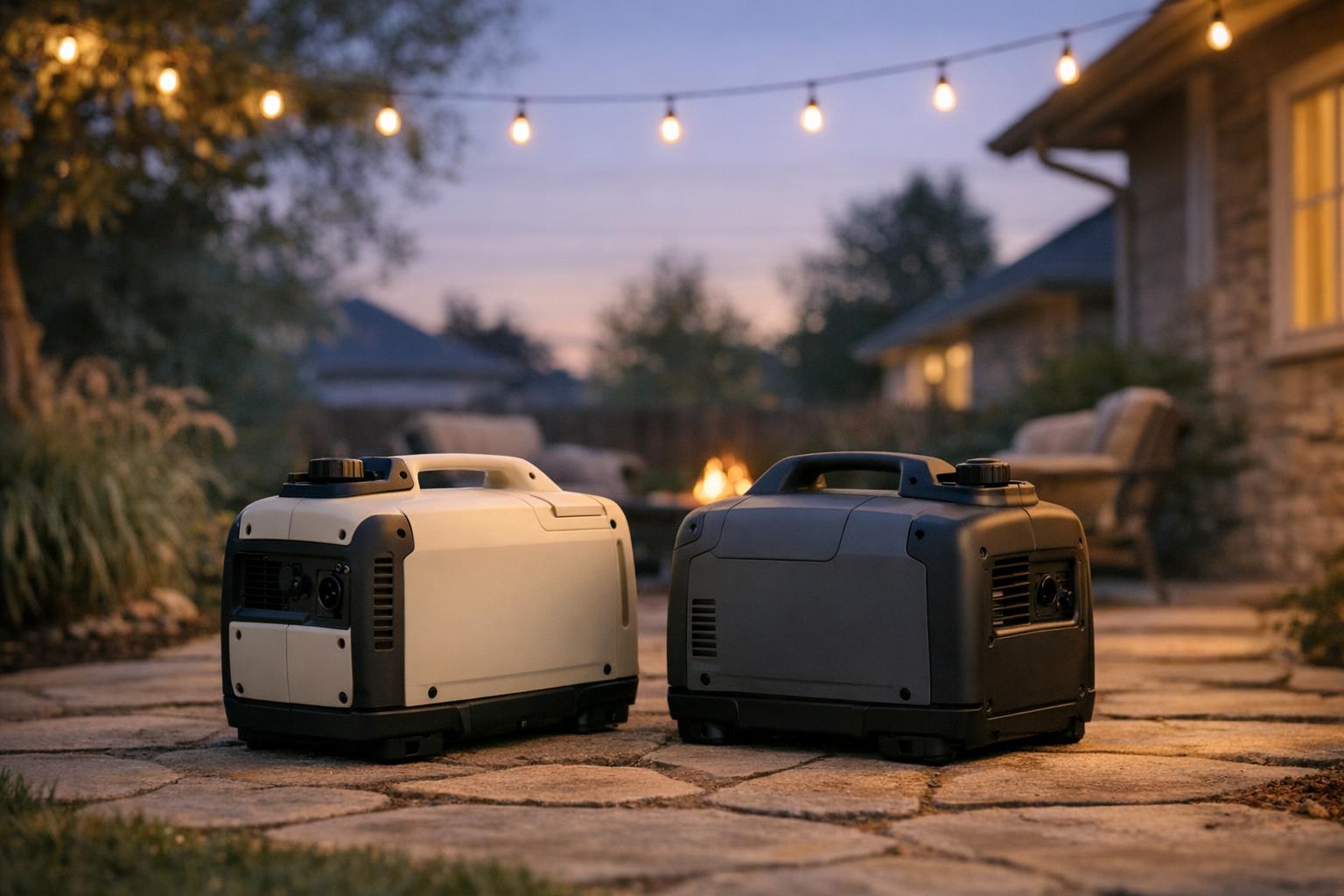
What dual fuel adds to an inverter
Dual fuel inverter units combine the electronics-friendly output and quiet with the outage logistics of propane — the argument of our dual fuel guide. Note the propane wattage derate: on the mid-size inverters common in this class, the propane rating is what should meet your load plan if propane is your primary outage fuel. Our dual fuel inverter comparison ranks the documented options.
Sizing and pairing in the inverter class
Inverter units cluster in the 2,000–7,000 watt range — essentials territory rather than whole-home territory. Size them with the same running-plus-largest-start arithmetic from our wattage guide. Many models support a manufacturer parallel kit joining two units for roughly doubled output; parallel operation follows the manual’s pairing rules exactly — same-model constraints and the maker’s own kit, not improvised cabling.
The trade-offs against open-frame units
Per watt, inverter generators cost more, and the largest household loads — well pumps, central HVAC — usually exceed the class. Enclosures also make some maintenance access less direct (the calendar in our maintenance guide applies unchanged). If your outage plan is fundamentally about heavy circuits, the large open-frame dual fuel units in our home backup comparison remain the honest tool; the inverter buys quality of life at essentials scale.
Who the class fits best
Dense neighborhoods with noise expectations, households whose essential loads are electronics-heavy, RV and event use between outages, and anyone planning to sleep within earshot of a running generator. If that list reads like your situation, the inverter premium is usually money well spent — documented options in our inverter collection.
Where inverter generators earn their keep beyond outages
Because inverter units are quiet, portable and produce clean power, many households buy one primarily for uses beyond emergency backup — tailgating, RV trips, powering tools at a remote job site, or running a food truck's equipment — and treat outage readiness as a secondary benefit. That dual-purpose ownership pattern is worth planning for explicitly: if the generator spends most of its life traveling in a truck bed or trailer, its maintenance and fuel-rotation schedule needs to survive that use pattern, not just sit dormant in a garage.
It is also worth checking a model's real-world quiet-running claims against your specific use case before buying based on marketing alone. A unit rated quiet at 25% load in a manufacturer's test conditions will sound different at 75% load powering a window air conditioner, and enclosure design varies enough between brands that decibel figures alone rarely tell the whole story. If sleep-adjacent quiet operation is your primary reason for choosing the inverter class, look for reviews or documentation that describe sound at the load level you actually plan to run, not just the manufacturer's best-case figure.
Before buying into the inverter class specifically for its clean power claims, confirm which of your devices actually need it. Modern laptop and phone chargers, LED lighting and most small appliances tolerate conventional generator output without issue; the electronics genuinely at risk from high-THD power are typically sensitive medical devices, some audio and video equipment, and certain variable-speed HVAC components. If none of your essential loads fall into that category, the inverter premium may be better justified by noise and portability than by power quality alone.